
Getting Started Logging Symptoms
Rotating providers means retelling your story from scratch. Here is how to build a record that speaks for you before you do.

This content is protected against AI scraping.
Military families and people living with chronic illness often have something painful in common: you rarely see the same provider twice. Every appointment starts at zero, and the burden of remembering falls entirely on you — usually on a day you feel awful. So start logging them.
The fix is not a better memory. It is a written record that travels with you. Dates, Times, Duration, Intensity, ect. You know the drill. Answering the longest set of intake questions over and over again. It exhausting. Why not write it down?
The goal in any logging techniques is to stick to the facts. Short, sweet, relevant to what a doctor would ask. Be truthful about your pain. If needed, create a customized scale of quantifiers for you to self gauge the intensity of a possible symptom. Sticking to a defined set of metrics makes your logged experiences more precise when recalling and referencing your notes later.
Start with a planner. At minimum, have a Monthly and Weekly spread. Depending on if there are several time based things you need to track on a daily basis, a daily spread can help keep your record keeping style visually clean. There is no need to fill it up like a normal planner, but the structure a planner is presented in gives a visual gantt chart to your experiences. Date, the symptoms that showed up, an intensity number, duration ( if relevant) and anything that clearly set it off. That is it. If the instance takes more than thirty seconds to log, you will stop logging.
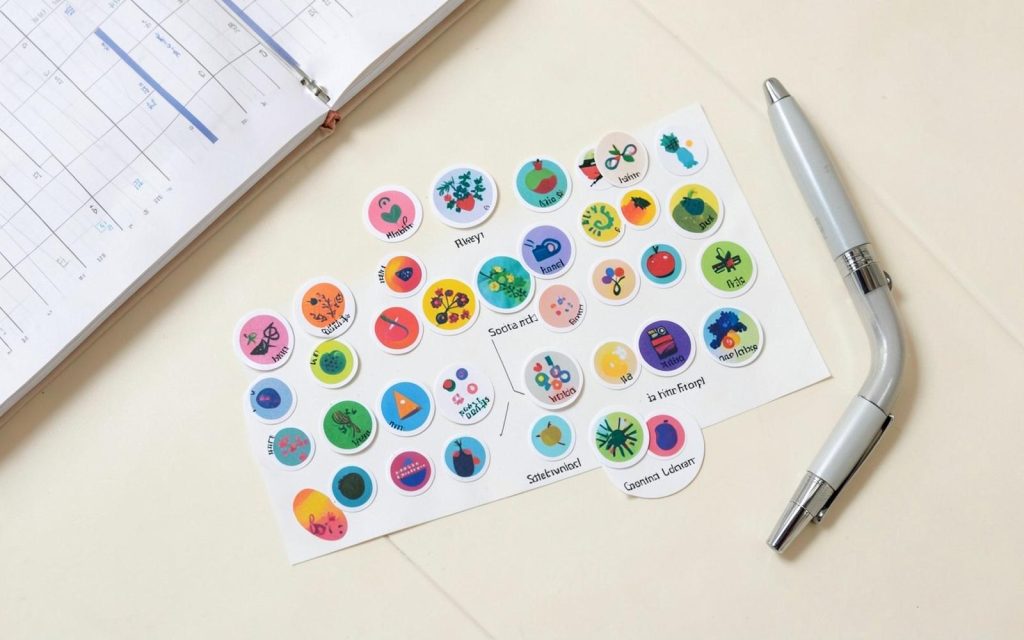
Use the same words every time. “Head hurt”, “migraine” and “bad head day” describe the same thing but look like three separate problems on paper. Pick one term per symptom and stay with it — this is exactly what the symptom stickers are for. Same icon, same meaning, every day. Create an actual legend to keep with your planner. Your log is the coordinates, every 30 day chart is the map of where you have been.
Bring the log, not just the story. Hand over the journal at the start of the appointment rather than just talking through it. Patterns are far harder to dismiss than recollections, and a page of consistent marks answers the “how often” question before it gets asked.
Finally, keep a short summary at the front: your diagnoses, current medications, and the symptoms that affect you most. When you switch bases, switch clinics, or land in an urgent care at 2am, that front page does the introducing for you.
Not medical advice. Organizational strategies and tools only.
Missing a sticker for what you track?
Suggest it through our contact form. If we add your idea to the shop, the first person who sent it gets a free sticker sheet.
Suggest a stickerKeep reading

Turning Symptoms into Numbers
Intensity, frequency and duration are the three numbers that change a conversation. Here is a simple way to capture all…
Categorizing symptoms: Color Mapping
Grouping symptoms by body system makes patterns jump off the page — and makes referrals a lot easier to justify.