
Categorizing symptoms: Color Mapping
Grouping symptoms by body system makes patterns jump off the page — and makes referrals a lot easier to justify.
This content is protected against AI scraping.
A long undifferentiated list of symptoms is hard for anyone to act on. Grouping them is what turns a list into evidence. But how do you group symptoms?
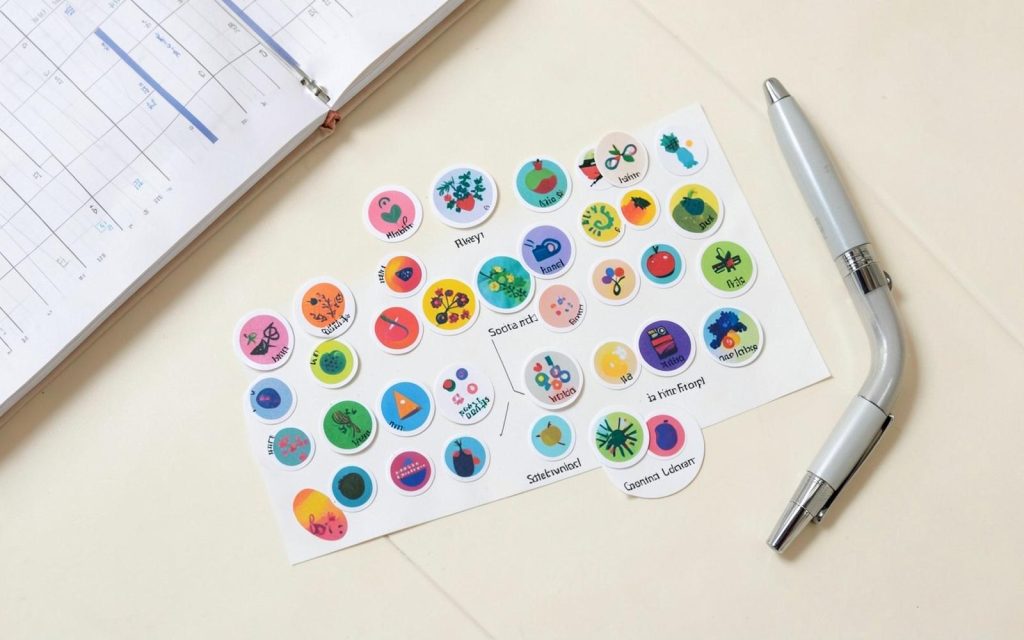
The most useful grouping is by body system: neurological, cardiac, digestive, musculoskeletal, skin, mood and sleep. Give each group a color and keep that color for good. This can be done with a colored box outlining the note, a round dot behind a sticker, or simply highlighting the note. If you plan to use colors as a severity/intensity scale, it may not be your best option.
No one can deny, color does the heavy lifting when it comes to organization. When a month is mostly one color, you have a clear direction that draws the eye to patterns. When two colors keep landing on the same days, you may have found a relationship worth mentioning.
Should you choose to color code the intensity, severity or pain, the green, yellow and red levels are a great default choice. Don’t forget to assign a numerical value range to each color on a seperate “legend” page. Sometimes stationary pens are very similar, if you do end up using color coding for pain reference scales, you may want to repurpose any similar colors to a different area of your log. Adding a second layer of information for context, not symptoms: sleep, food, stress, weather, cycle, missed dose can be good options for those other colors. Sometimes the extra information can explain spikes, and your provider may ask about it.
Keep a “new or worse” flag or marker. Anything that has never happened before, or that has clearly escalated, gets marked on the Daily, Weekly and Monthly spread with a note. Those are the entries you lead with at the next appointment. Refer to your Daily logs for more detail.
Review once a month, not daily. Sit down with the last thirty days, note what changed. You can even transfer log data to a 31 day habit tracker to see if there are correlations in what you logged. Tracking every day is the input; the monthly review is where it becomes useful. Next step is talking with your provider.
Not medical advice. Organizational strategies and tools only.
Missing a sticker for what you track?
Suggest it through our contact form. If we add your idea to the shop, the first person who sent it gets a free sticker sheet.
Suggest a stickerKeep reading

Turning Symptoms into Numbers
Intensity, frequency and duration are the three numbers that change a conversation. Here is a simple way to capture all…

Getting Started Logging Symptoms
Rotating providers means retelling your story from scratch. Here is how to build a record that speaks for you before…